
The Content Marketer’s Reality Check Survey 2025

“Are Content folks actually writing with AI?”
“There is so much noise about LLMO, GEO, AEO, and whatnot! But I still don’t know most of it. Are there more people like me?”
“Ranking content in #1 position is no longer the only metric. How do I prove that content is contributing to ROI?”
As a Content Marketer in 2025 (prepping for 2026), if you still have these questions (or even any one of them), you are NOT alone!
In fact, don’t blame yourself! Having questions means you are trying to learn new things, you are curious and that’s a great sign.
And to help you out, I created the “The Content Marketer’s Reality Check Survey 2025” survey. 117 of you took the time to fill it out and it gave me some great insights on:
Where are Content Marketers in terms of including AI in their regular workflows?
How much are Content Marketers aware of GEO (and the other jargon)?
What do Content Marketers think about attribution?
Let’s get started then, shall we?
BDW, if you are a content writer planning to transition to content marketing in 2025, you must check out my newsletter👇
Category 1: AI in Writing, Editing, and Proofreading
Q1. What is your biggest challenge when using AI for research/writing/editing/proofreading?
Note: Users selected multiple options for this question.
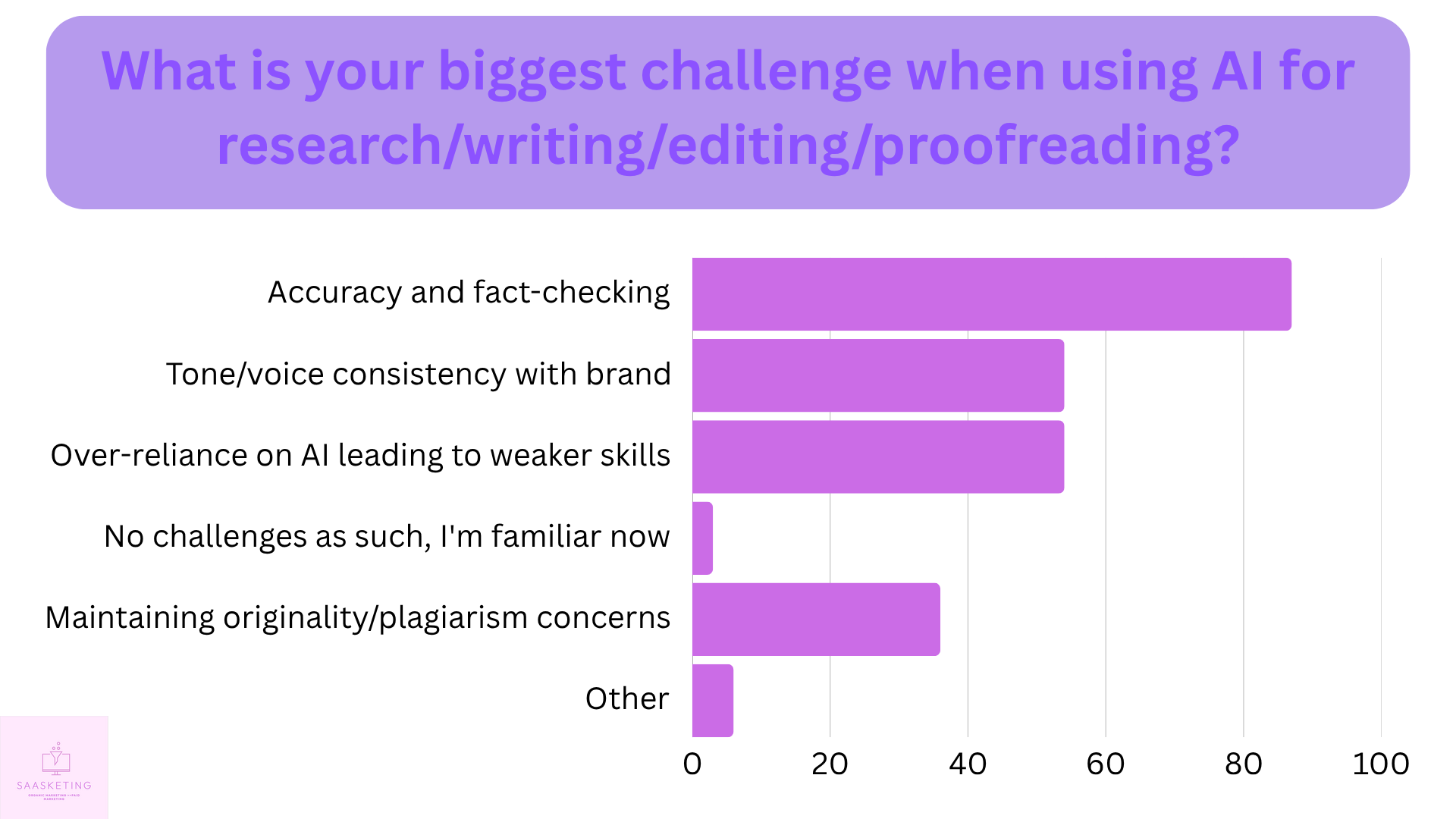
Honestly, this was expected! Even though so many of us are using AI for writing, research, and editing, only a few take the time to fact-check. Otherwise, there wouldn’t be so much trash content on the internet.
But I get it! Sometimes, even though you want to fact-check, you don’t know how to! For those of you, here are a few quick tips to fact-check AI outputs:
Always ask AI to share sources to certain stats/facts in bracket
Read everything AI shares and cross-question the reason/thought behind it
Trust me, AI tends to connect anything with anything to build a narrative. I mean, it can connect Earth with a merry-go-round to establish that since both are rotating, both are planets (or amusement park rides) 😎.
Ask AI to roast an article, go ahead, do it! The same tool that wrote all those fluffy sentences will come back with impressive criticisms like “This sentence is abrupt”, “This is forced and does not make any sense,” etc. Provide it with enough context about the objective of a piece/research to enhance the analysis further
📚 Feel free to check out my AI+Human Content Playbook where I have shared detailed prompts to fact-check AI engine outputs.
The other two major concerns seem to be about: maintaining the same tone throughout a piece and over-reliance on AI. Let me take these one at a time.
To maintain same tone throughout:
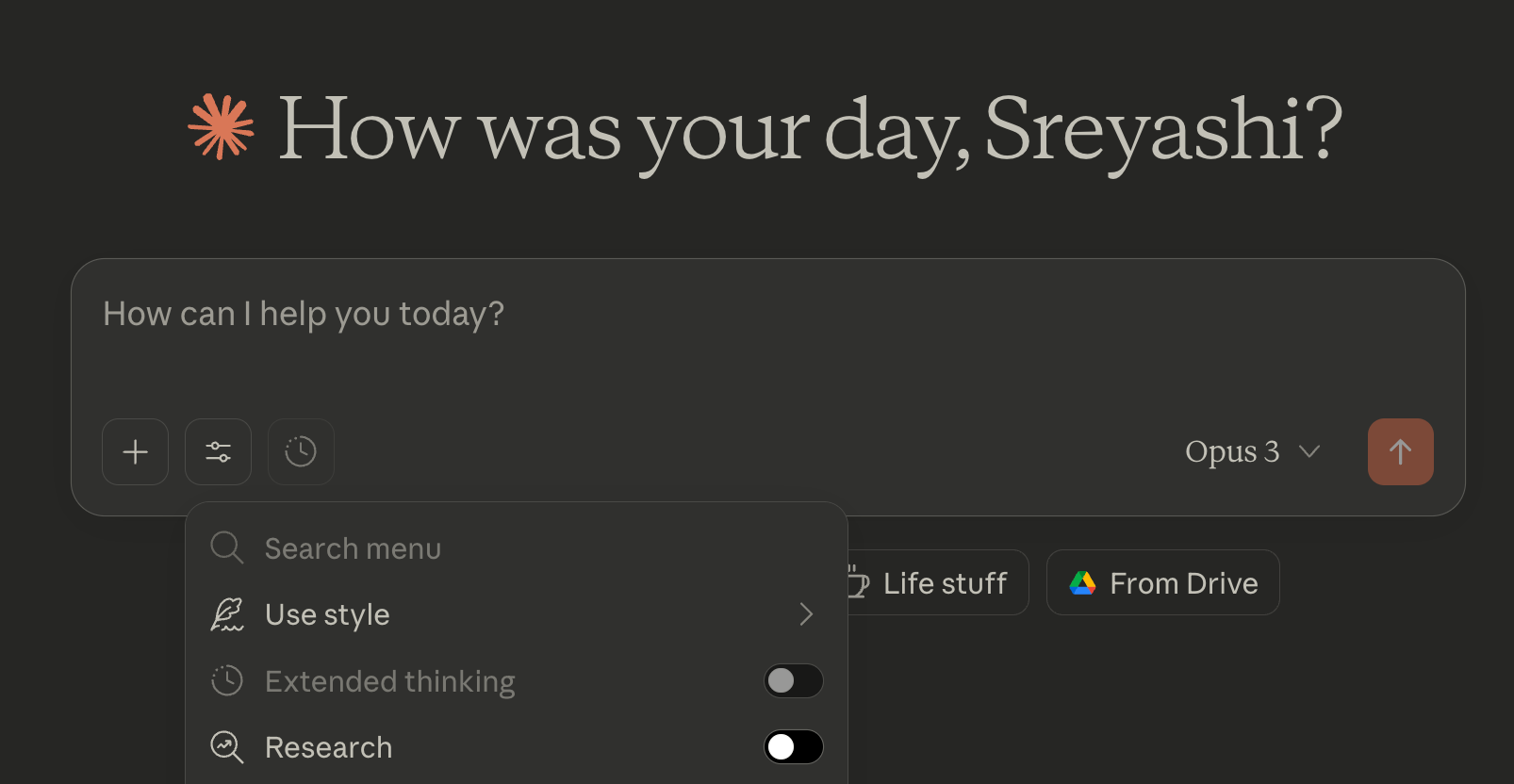
Create a tone bank. If you are using Claude, leverage the “Use Style” feature that allows you to create specific tones and writing styles for specific projects
Feed AI tools with relevant reference content to ensure that you are setting the expectation correctly. You can’t expect it to write like you want without explaining the specifics. Even if it is about a spelling, make sure to explain it (For example, spell “e-commerce” not “eCommerce”)
Make use of Projects. Especially for ChatGPT, the project feature is gold! ChatGPT (and now Claude too) can read between projects and retain information within a particular project, regardless of how many threads there are. This eases your job as you don’t need to explain voice and tone styles again and again
Over-reliance on AI leads to weaker skills
I agree. And honestly, it’s up to you. If you are a patient writer having the time to research and write on your own, why take AI’s help? Or even if you do, limit it.
But if you are a content marketer working in a fast-paced startup, you are forced to use AI because you have targets to fulfill and deadlines to meet. But even in that case, make sure to draw certain limits. Instead of going end-to-end with AI, choose an AI+Human workflow. Clearly plan which tasks are taking your time and can be automated, and which ones are better to be done by yourself.
The secret is in mix and match, trial and error.
Q2: How do you feel AI has impacted your workflow?
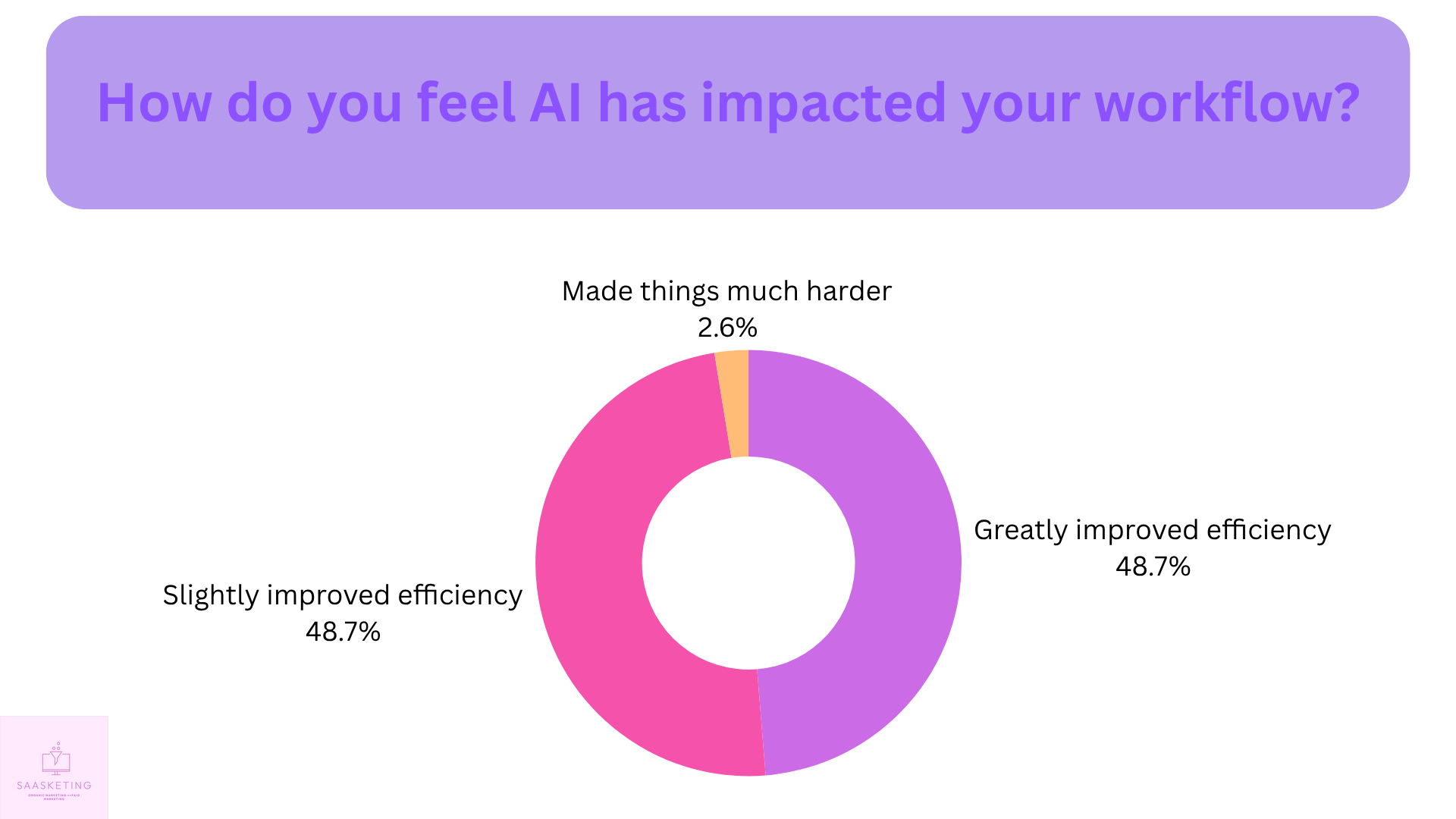
Wow, this is interesting! An equal number of respondents believe that AI has either greatly or slightly improved their efficiency. To each their own I guess? Depends on how you use AI and what do you define by “efficiency”!
But the more interesting fact here is that 2.6% of respondents believe AI made things much harder for them.
This could be folks who either:
Don’t know how to use AI at all
Are using it wrong, relying on AI for EVERYTHING and repenting their decisions
So yeah, if you belong to any one of these categories, feel free to read my suggestions in Q1 again.
Category 2: AI Visibility & LLM Mentions (LLMO Ranking)
Q3: What’s your main challenge in getting content/brands surfaced in LLM answers (e.g., AI Overviews, ChatGPT, Perplexity)?
Note: Users selected multiple options for this question.
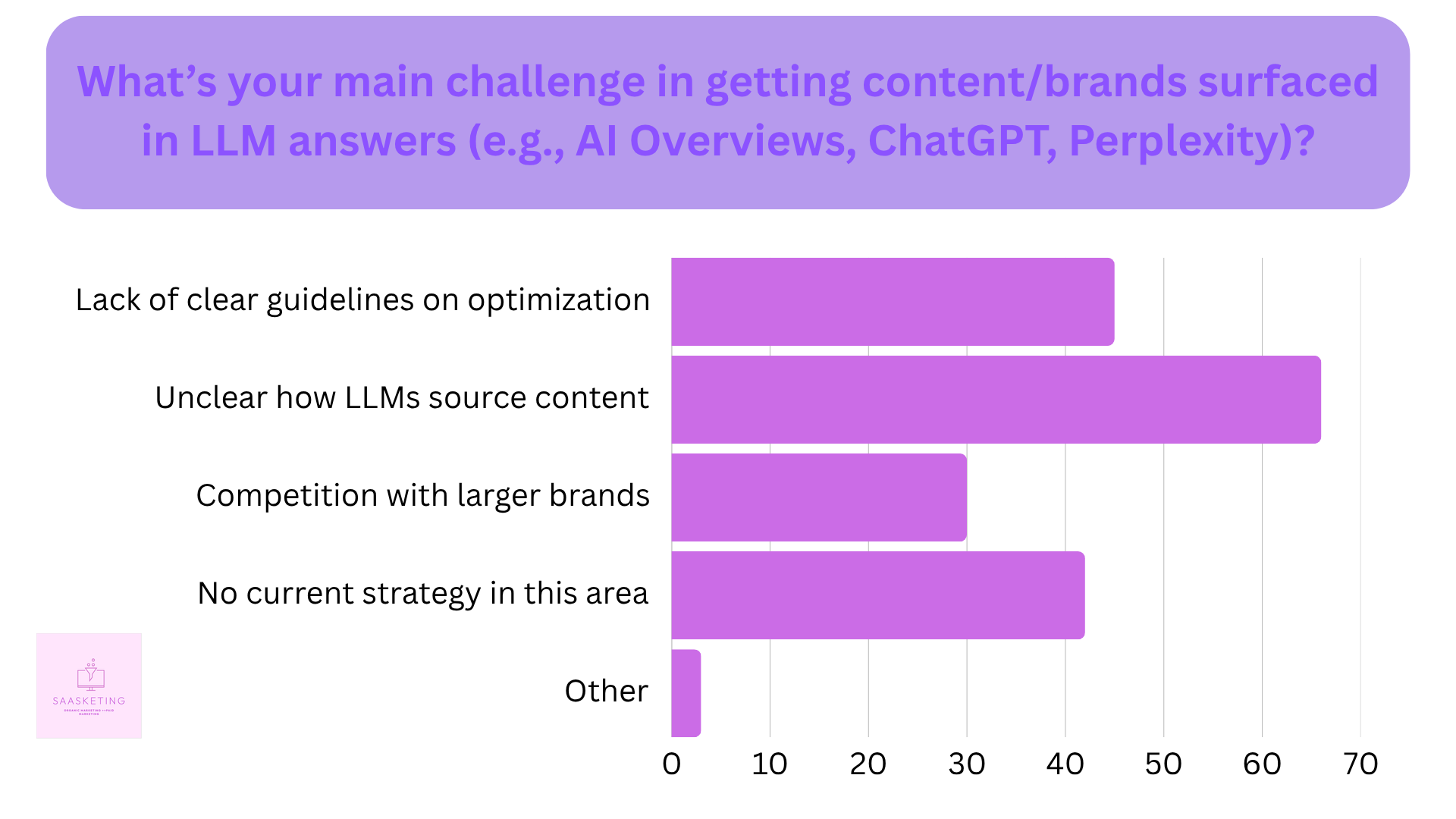
There’s a LOT of noise regarding LLM optimization and if you are feeling left behind, trust me, you’re not alone. It is still at the very early stage and most marketers are still finding their way through it with trial and error.
I will share some strategies and resources that worked for me but I’m still learning too.
LLM optimization tips that helped me 👇
Creating more in-depth listicles and BOFU pieces
Adding schema markup to articles, more specifically, FAQ schema, How-to schema, Product schema, etc. It’s an easy process; you can use any schema generator and check a quick tutorial on YouTube
Taking Technical SEO seriously. I regularly audit our site with Ahrefs and Screaming Frog to identify technical issues like 5XX pages, 404 pages, canonical URLs and get those fixed by experienced developers
Uploading LLM TXT file every month (I guess this is controversial so you can skip it)
Doubling down on backlinking campaign. Focus on getting contextual backlinks from reputable sites. Try harder to get mentions
Being present in platforms like Reddit, G2, Gartner, etc. as LLMs tend to trust these sites a lot
Focusing more on formatting of articles, making them skimmable, adding TL;DR section, more tables, text boxes, interactive demos, etc. to create a smooth reading experience
📚 Resources and Further Reads
👤 LinkedIn Creators who share real insights
Q4: Are you currently trying any strategies actively to get more AI visibility?
Note: Users selected multiple options for this question.
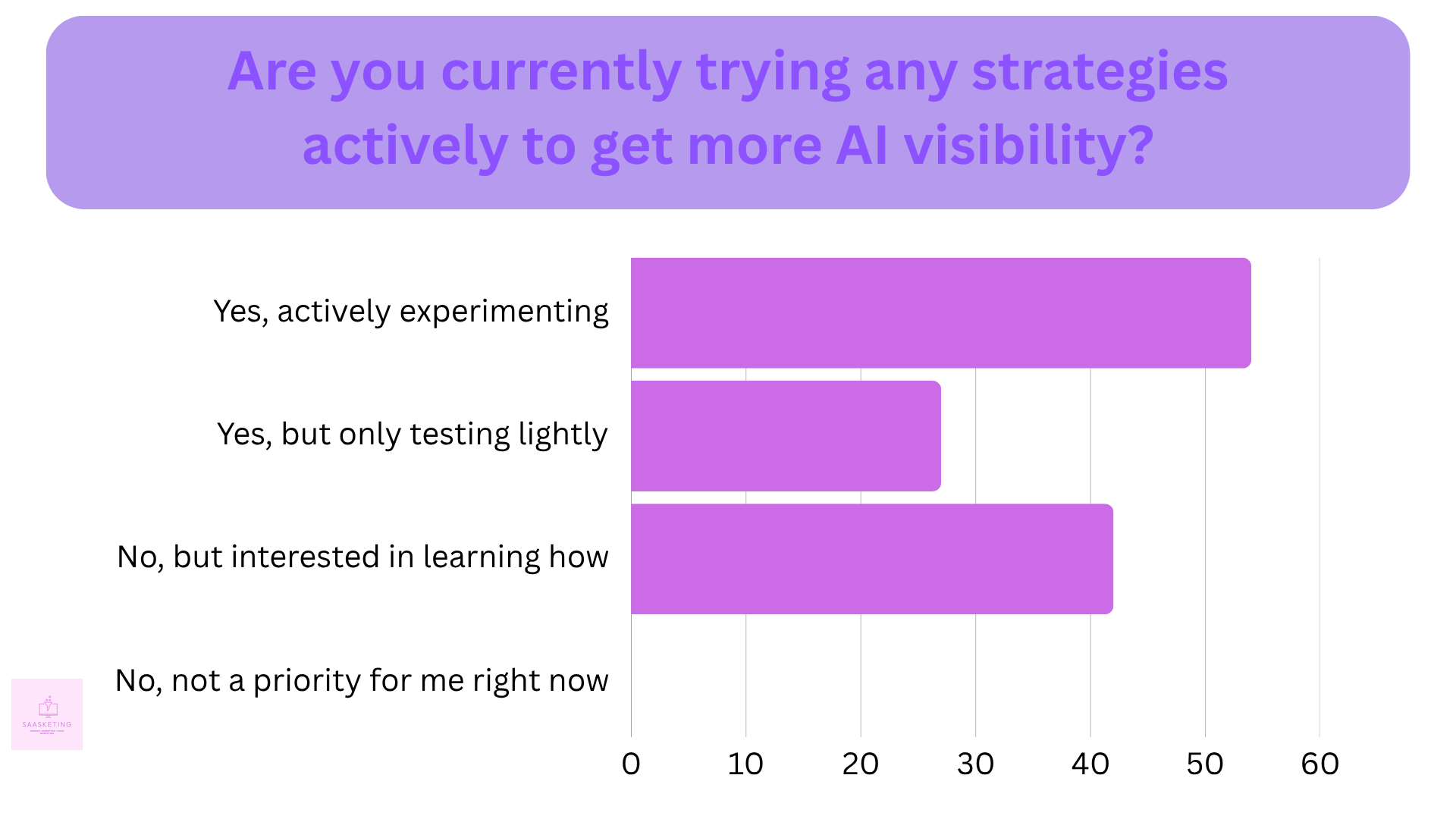
It’s great to see that most of you are actively experimenting. SEO is evolving, search is evolving, and we as content marketers should experiment continuously!
For those of you who are interested to learn more, please refer back to the strategies and resources mentioned above.
And remember to always experiment, maybe you’ll find something new about LLM engines that’s not been discovered already!
💡 LLMs love BOFU content. And if you are looking to learn more about BOFU content creation, research and strategy, check out my BOFU content e-book. Purchased by 58 of you to date.
Category 3: Content Attribution and Measurement
Q5: What’s your biggest pain point with attribution?
Note: Users selected multiple options for this question.
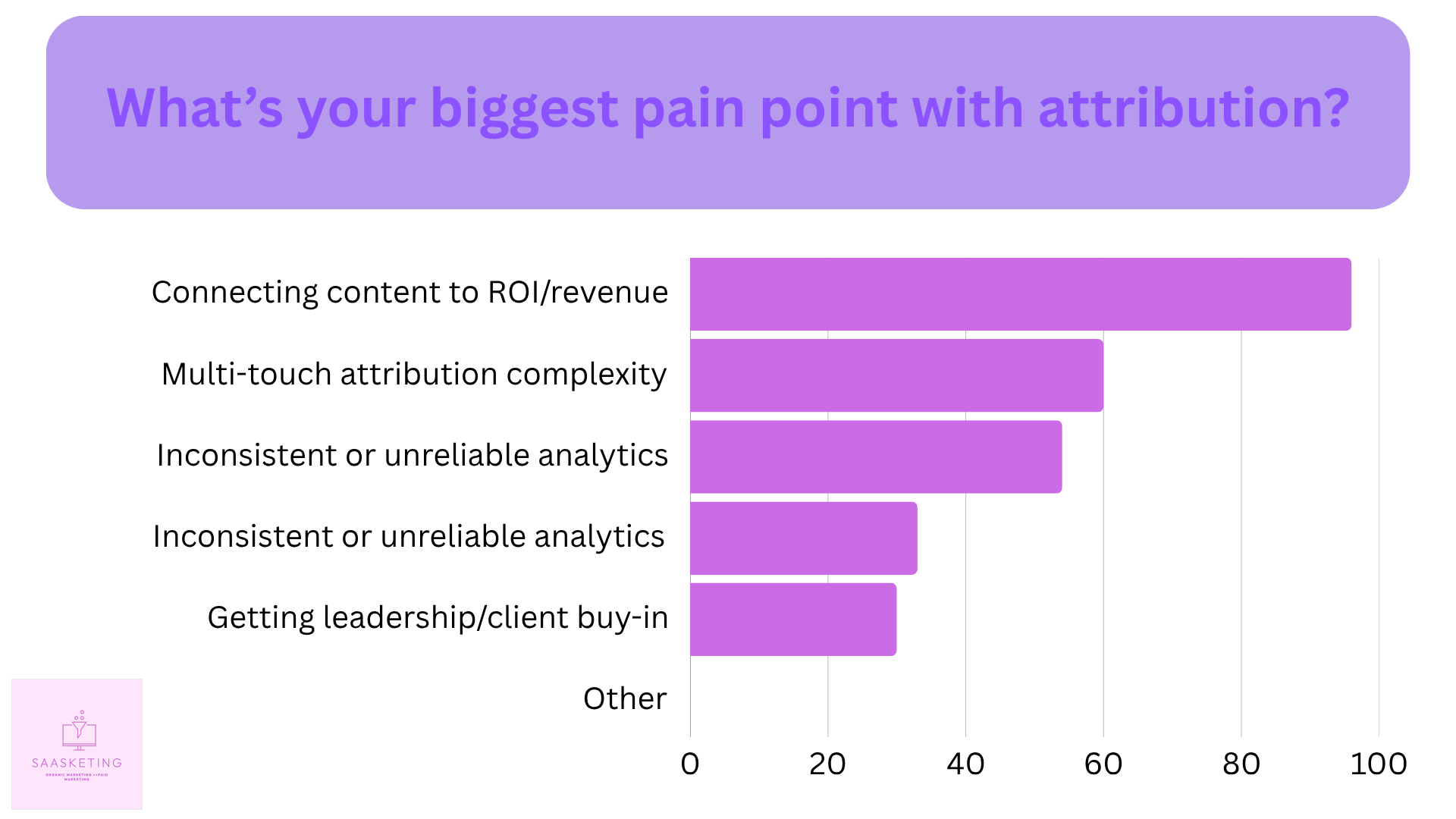
Okay, I am not surprised but I’m definitely concerned! As a content marketer if you are struggling to: connect content with ROI, that means two things:
You don’t know how to communicate the ROI of your role as a content marketer to the leadership
You are not able to identify your money pages, and that means a huge gap in your content strategy
To be honest, there is no single way to connect content with revenue. But there are several ways that you can try to get the bits and pieces together.
Some tools that can help you here are:
Google Analytics: To learn how people are interacting with your content, which sources are they coming from, how much time they are spending on your site, and how quickly they are leaving. You can also identify which pages are most engaging to your audience and which pages compel them to take action, whether it's booking a demo, signing up for a trial, or downloading a lead magnet.
Google Search Console: To identify which pages are bringing the highest impressions and clicks. You can also find out which pages are being searched for which queries, from which region, and for a specific timeline.
HubSpot (or any CRM): Your CRM shows you who booked a demo, what the source is (organic/paid/direct), and if the person who booked the demo matches your ICP or not. With dedicated CRM reports, you can actually find out the lead quality, if it's just a Marketing Qualified Lead (MQL) or a Sales Qualified Lead (SQL), and how much the lead is adding to the marketing pipeline.
Attribution tools: Attribution tools like Factors.ai, Dreamdata, and even HubSpot help you understand the entire journey of a prospect - starting from finding your website to booking a demo. This gives you a clear understanding of what all pages they explored before booking a demo. Since multi-touch attribution is a struggle, these tools help you get a lot of clarity over customer journey.
Heatmap tools: Heatmap tools like Hotjar help you understand how far a prospect scrolled, where they clicked, where they paused and left, etc. This again gives you an idea of where to add CTAs, which sections to revisit within a content piece, and so on.
🌟 I talk about content attribution on my other newsletter SaaS Splash Bulletin all the time. Make sure to subscribe.
📚 Further Reads on Content Attribution from SaaS Splash Bulletin Archive
What metrics should you track throughout your blog lifecycle?
5 Different ways content marketers can use Google Analytics Data to their favor (+Steps)
Q6: How confident are you in your current ability to measure the impact of your content?
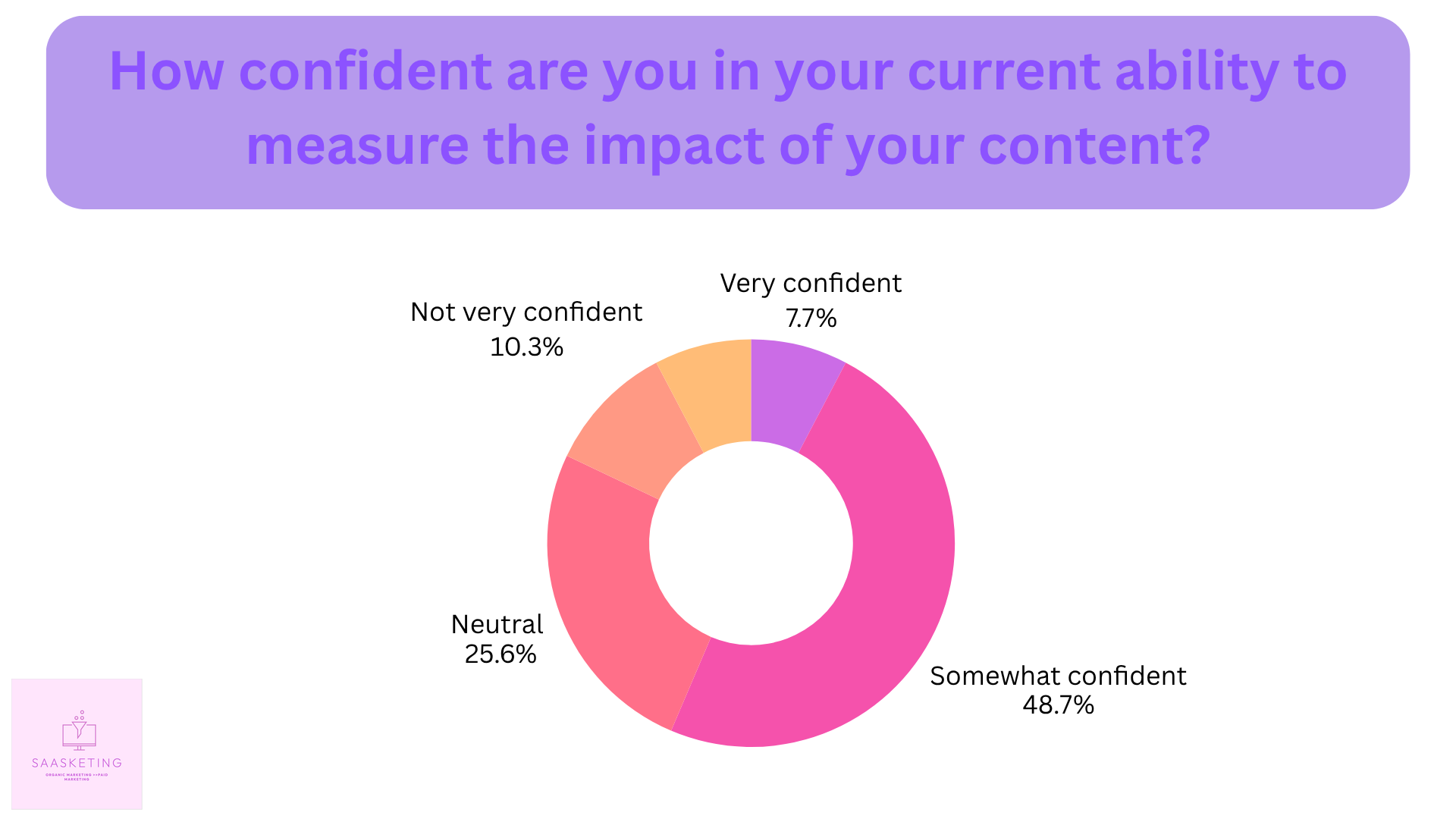
It’s great that the majority of you are somewhat confident. I hope the above tools and reads I suggested will help you get to the bottom of it.
For any further queries on content attribution, feel free to get in touch with me 👇
Category 4: Strategy & Planning
Q7: What’s your biggest challenge in developing a content strategy?
Note: Users selected multiple options for this question.
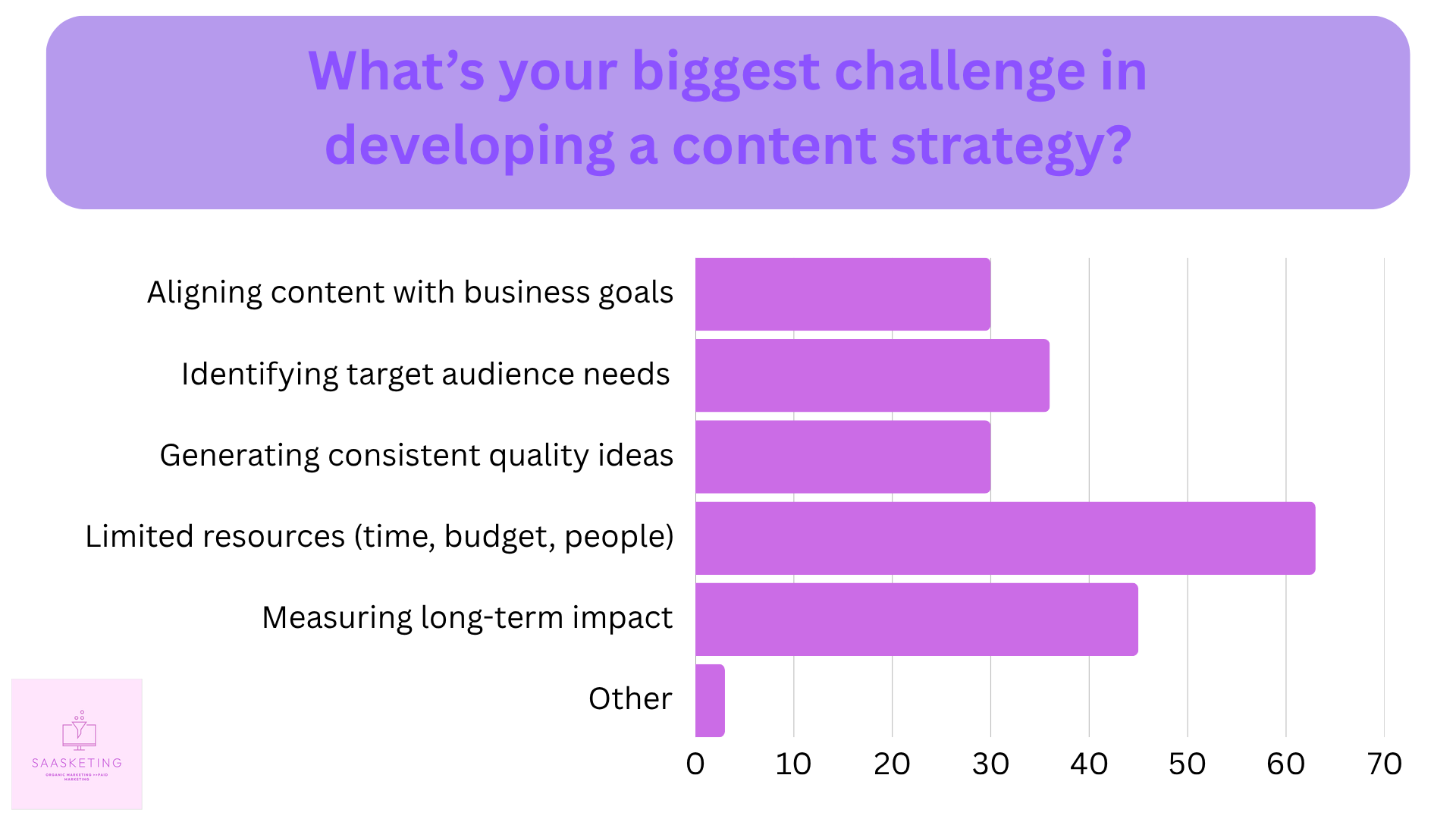
Okay, this was something I didn’t expect. While I thought the biggest struggle behind creating a content strategy would be process, identifying target audience needs, or measuring impact, it’s not the case. The majority of people struggle with limited resources.
My 2 cents here would be: if you are working at a startup or even working as a consultant/freelancer, it is obvious that you will have fewer resources and even a limited budget.
What you can do in such scenarios is to:
Deep dive into internal resources
Think with your mind and outsource the executions to AI
Hire an agency or outsource certain tasks from expert freelancers so you don’t have to bear the burden alone
Create playbooks, document everything so you don’t have to repeat same things every time
Become more tech savvy, start building AI agents, AI workflows, custom GPTs to get required jobs done
And, of your content strategy struggles are related to:
→ Aligning content to business goals: Read answer 5
→ Identifying audience needs: Read answer 5 + Rely on internal resources like ICP documentation, sales decks, sales call recordings, competitor battlecards, etc. If you don’t have them, start building. Basically, communicate and ask questions to founders, PMs, PMMs, and customer success team members unless all your questions about potential customers are answered. Trust me, this should be part of your onboarding process.
→ Generating consistent content ideas: Read answer 5 + the above point
→ Measuring long-term impact: Read answer 5 + my specific newsletter issues
Q8: What would most help you improve your content strategy today?
Note: Users selected multiple options for this question.
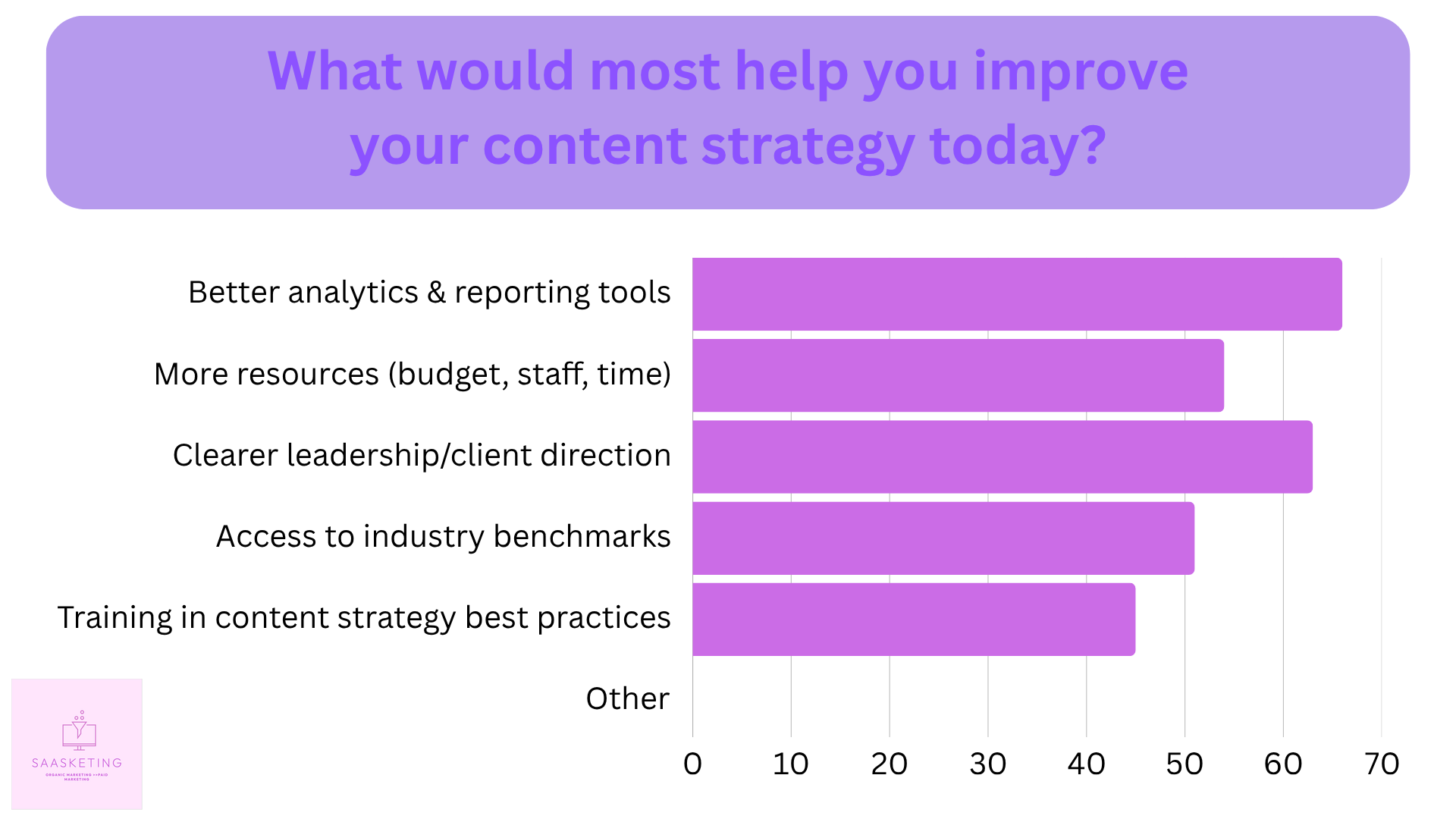
As expected analytics is a big challenge, and I hope my inputs in question 5 helps you get through this.
Above all, a content marketer's mindset shift is very important when you are trying to learn/apply new things.
Since most content writers come from a writing background, it is easy to engage them in tasks like:
Research
Building a strong narrative
Editing and proofreading
Content project tracking
Creating detailed content briefs
I’m not saying these tasks are inferior. They are difficult, require a lot of patience and skills. But what I mean is you should not limit yourself to these tasks only.
Develop the mind of a marketer and embrace the skills of a writer - and see the magic unfold!
What’s Next?
I hope you don’t use this report only as a REPORT (if that makes sense)!
Use it to:
→ Learn what fellow content marketers are thinking
→ Change your mindset and start believing that content is a key driver in the marketing function (you have to believe it before you convince others)
→ Hopefully, the best practices, tips, and further reading suggestions will help you navigate through it all
If you still have questions, DM me on LinkedIn → Sreyashi’s LinkedIn
Or talk to me on Topmate 👇
That’s it for now!
Will be looking forward to your feedback on my first Substack!
Happy Marketing! 🌻
This is fucking detailed. It gives so much clarity. Thanks for sharing this @Sreyashi